
Clinical expertise meets intelligent technology.
See how Shifaya works
Turning clinical conversations into structured, validated records.

From conversation to clinical draft
Every encounter is captured securely and structured for clinician review - nothing enters the record until it's approved.
Grounded in published clinical AI research

Clinical documentation is changing
Ambient clinical AI turns the conversation itself into the starting point for the medical record - captured securely, structured for review, and never entered into the chart until a clinician approves it.



The research behind ambient clinical AI
A multicentre quality-improvement study found reported clinician burnout fell substantially within 30 days of ambient AI scribe adoption. Shifaya is being built on the same category of technology.
Reported burnout before ambient AI scribe use
Reported burnout after 30 days of use
Time to measurable improvement
Source: Olson KD, Meeker D, Troup M, et al. “Use of Ambient AI Scribes to Reduce Administrative Burden and Professional Burnout.” JAMA Network Open, 2025. Findings describe ambient AI scribes broadly, not Shifaya-specific results.
See the full research library
A five-stage path to clinical intelligence
The workflow
Clinical conversation → Medical speech intelligence → Clinical understanding → Structured draft → Clinician validation → Clinical record


Ambient documentation


The consultation is securely captured, transcribed, and turned into a structured medical draft for clinician review.


Contextual documentation
The current visit is interpreted alongside relevant history - previous diagnoses, medications, and results surfaced automatically.


Longitudinal clinical intelligence
Shifaya identifies clinically relevant patterns and changes across time, specialties, and encounters.


Clinical decision support
Structured clinical considerations are prepared for professional review - never issued as automated conclusions.


Clinical workflow intelligence
Once validated, the same understanding can help prepare referrals, investigation requests, and patient summaries.
We're building Shifaya around one principle: AI assists. Clinicians decide. Technology can process enormous amounts of information - but clinical judgement, context, and responsibility remain human.

Ambient clinical intelligence begins with the conversation - captured securely, structured for review, and never entered into the record until a clinician validates it.
- Less administrative burden
- More attention for the patient in the room


Where technology meets clinical judgement
A useful clinical AI platform shouldn't remove the clinician from documentation or decision-making. Its purpose is to reduce the mechanical work surrounding professional judgement.
Contact Us“The future relationship should not be clinician versus artificial intelligence. It should be clinician with artificial intelligence.”
- Shifaya design principle
Principles that guide Shifaya
AI assists. Clinicians decide.
Every generated record remains a draft until a clinician reviews, edits, and approves it.
Intelligence should be traceable.
Every clinical consideration should be explainable - where it came from, and why it was surfaced.
Trust by design.
Encryption, audit logging, and clinician validation are part of the architecture, not compliance add-ons.


Designed for real clinical environments
From individual hospitals to multilingual health systems across the Gulf, Shifaya is built around the environments where medicine is actually practised.
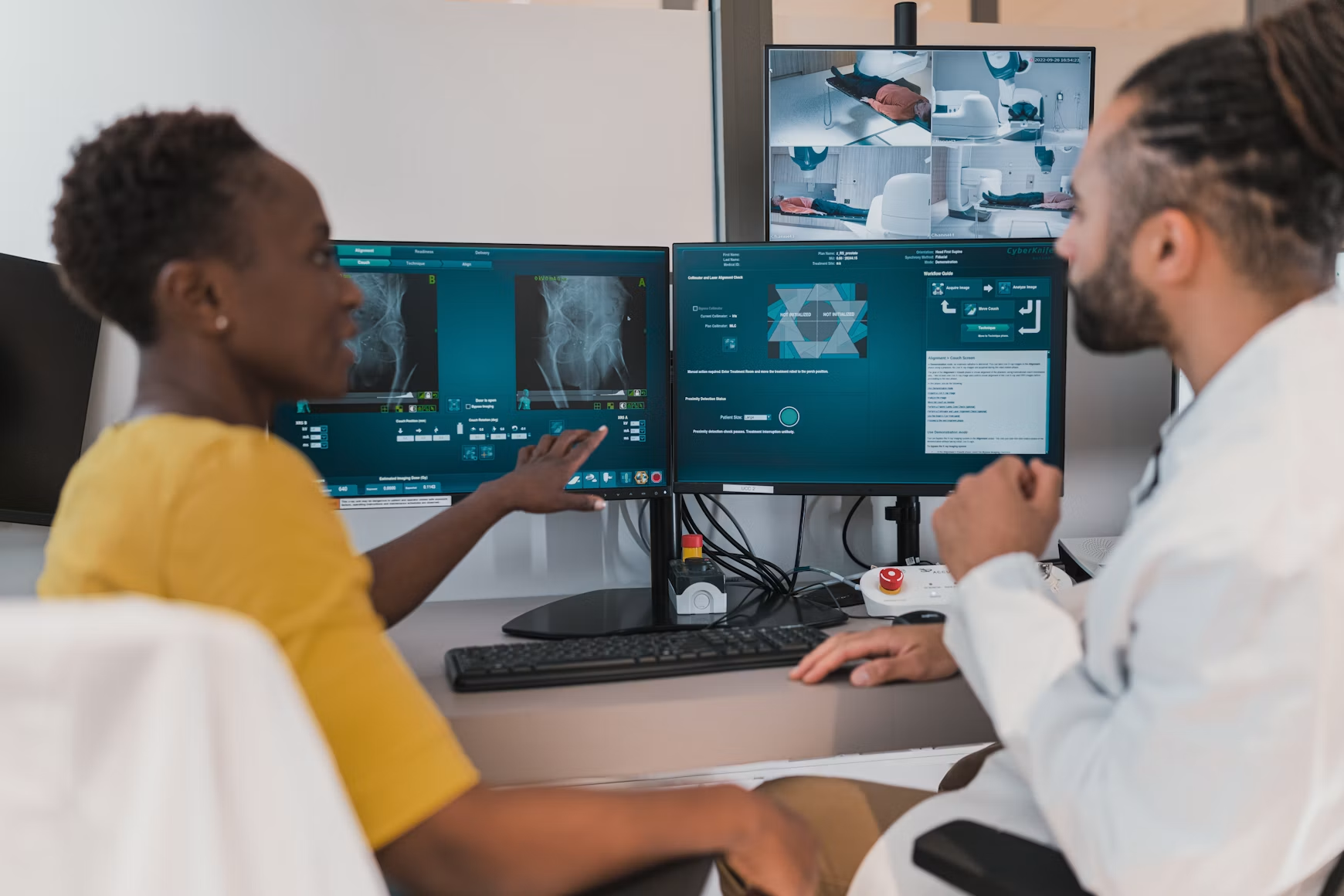
Hospitals & health systems

Structured clinical documentation and longitudinal intelligence integrated directly into the systems clinicians already use.

Multilingual & Gulf healthcare

Built from the ground up for Arabic-English clinical environments - not translated after the fact.
Multi-specialty care teams

Helping cardiology, endocrinology, nephrology, and primary care see the same patient more clearly, together.
Three elements, one system

Technology
Capable of understanding increasingly complex clinical conversations - not just transcribing them.

Clinicians
Responsible for what information means, and what should happen next.

Workflow
Determines whether intelligence becomes useful at the moment it's needed.

Evidence from real clinical environments
Ambient AI in a multilingual Swiss hospital
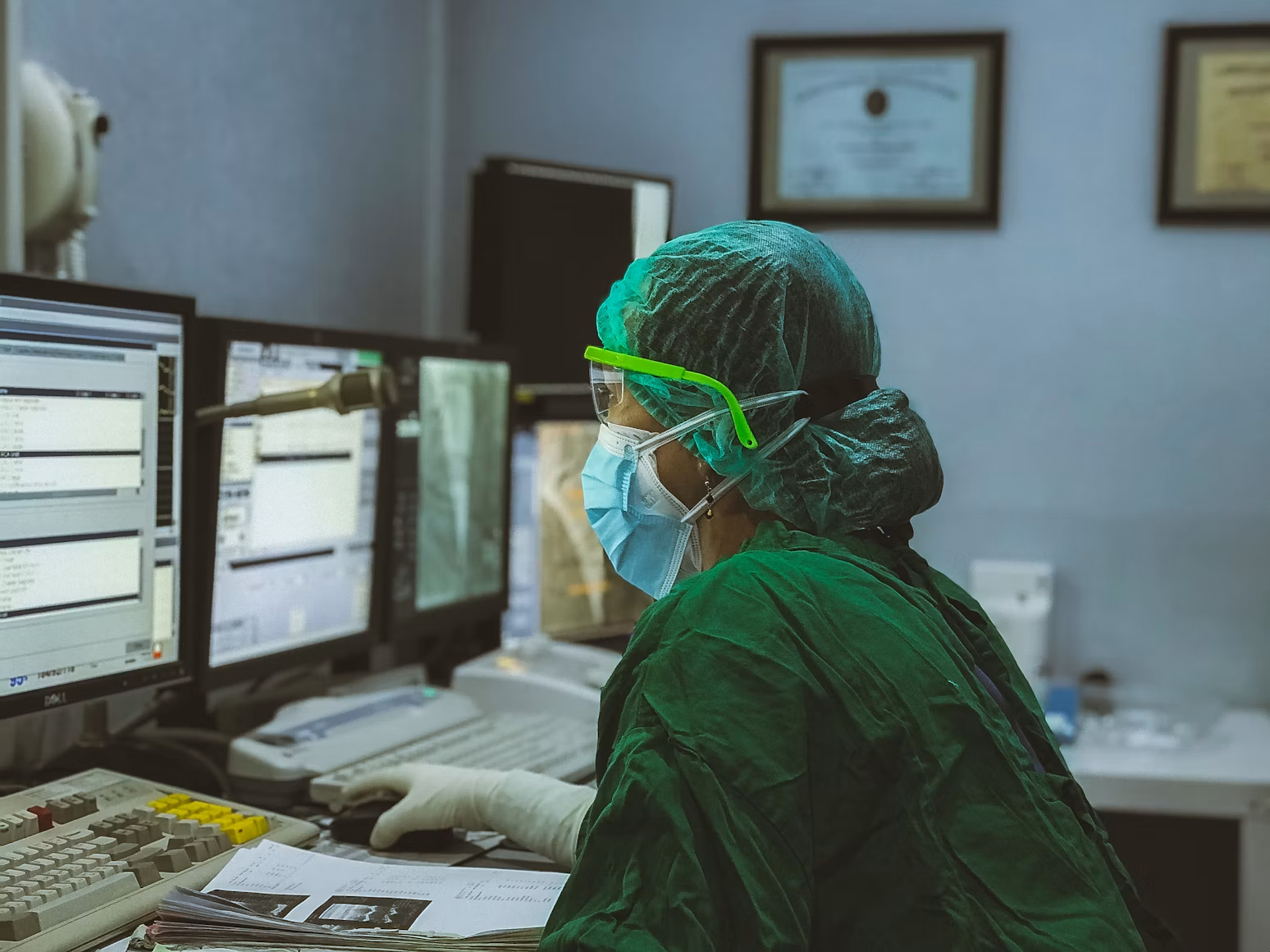
A proof-of-concept study comparing documentation methods found ambient AI produced the shortest physician documentation time among the approaches evaluated - while researchers continued to emphasise the importance of professional review.


Core benefits
Shifaya is designed to reduce the mechanical work around clinical documentation - not to replace the judgement that makes medicine work.
- Less time on documentation, more time with patients
- Structured drafts ready for clinician review
- Built for Arabic-English, multilingual care
- Every record stays a draft until you approve it
Shifaya's initial product requirements are informed by real hospital procurement specifications for AI-assisted medical documentation.
Get in touchWhat the published research says
Findings from independent studies of ambient clinical AI - not Shifaya's own results.
JAMA Network Open, 2025
Multicentre quality-improvement study
Reported burnout among ambulatory clinicians fell from 51.9% before implementation to 38.8% after 30 days of ambient AI scribe use.
Gładysz M, et al., 2026
Multilingual Swiss hospital study
Ambient AI documentation produced the shortest physician documentation time among the methods compared, though professional review remained essential.
Stanford Medicine, 2024
Ambient AI in routine clinical care
The purpose is to allow clinicians to spend more time interacting with patients and less time performing administrative work.
Building the next stage of clinical documentation
Shifaya is being built with healthcare organisations who want documentation to work differently.